Disclaimer: This article is for educational and informational purposes only and does not replace professional medical advice. Individual results may vary.
Having nice, clear skin is often seen as a result of good skincare products, but what you eat every day plays an equally important role. Your skin reflects your internal health, hydration, and nutritional balance. A poor diet may contribute to dullness or dryness, while nutrient-rich foods can support a smoother, healthier-looking complexion over time.
While food is not a medical treatment for skin conditions, research shows that a balanced diet rich in vitamins, antioxidants, healthy fats, and minerals can support overall skin health.
In this guide, we’ll explore 15 powerful foods for nice skin, explain why each one matters, and share easy ways to include them in your daily routine.
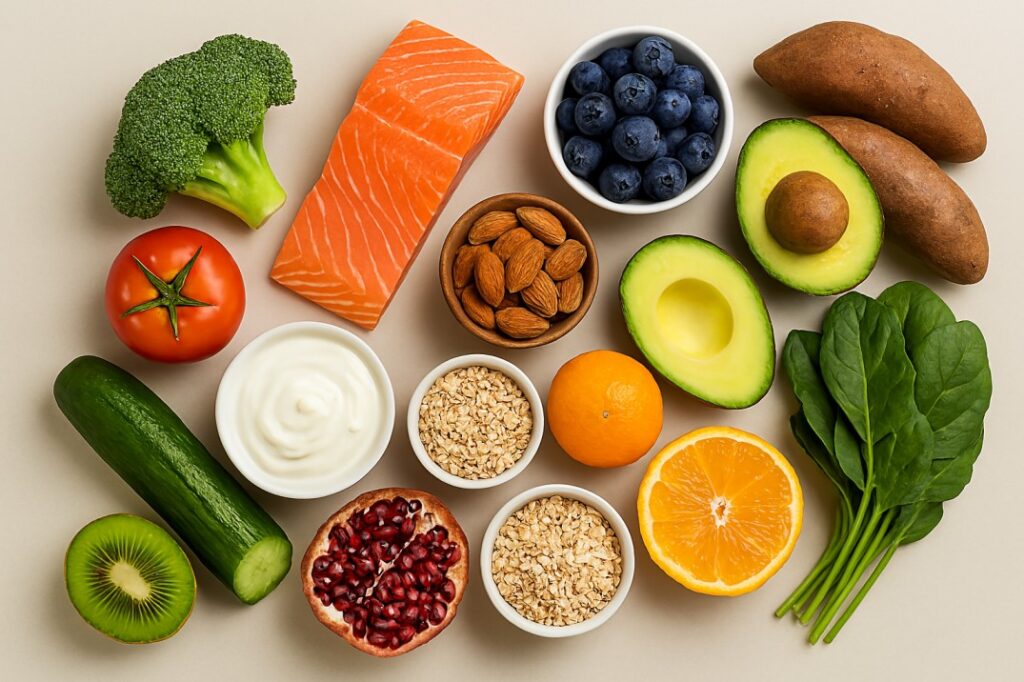
Foods for nice skin include fruits, vegetables, healthy fats, lean proteins, and antioxidant-rich drinks. These foods provide essential nutrients like vitamin C, vitamin E, omega-3 fatty acids, zinc, and antioxidants that help support skin hydration, elasticity, and a natural glow when eaten consistently as part of a balanced diet.
Table of Contents
Why Diet Is Important for Skin Health
Your skin is the body’s largest organ and constantly renews itself. To do this effectively, it needs proper nutrition. Food helps support:
- Skin cell repair and renewal
- Hydration and moisture balance
- Protection from environmental stress
- Elasticity and smooth texture
Diet alone cannot change your skin overnight, but long-term eating habits can influence how your skin looks and feels.
15 Best Foods for Nice, Healthy-Looking Skin
1. Avocados
Avocados are rich in monounsaturated healthy fats, which help maintain skin moisture and flexibility. Dry skin often lacks essential fats, and avocados help replenish these naturally.
They also contain vitamin E, an antioxidant that supports the skin’s protective barrier, and small amounts of vitamin C, which plays a role in collagen support.
Why avocados are good for skin:
- Help keep skin soft and hydrated
- Support elasticity and smooth texture
- Protect skin from environmental stress
How to eat them:
Add sliced avocado to toast, salads, wraps, or blend into smoothies for creamy texture without added sugar.
2. Fatty Fish (Salmon, Sardines, Mackerel)
Fatty fish are among the best sources of omega-3 fatty acids, which are essential fats your body cannot produce on its own. Omega-3s help support the skin’s natural oil barrier, keeping it hydrated and supple.
These fish also contain protein, vitamin D, and antioxidants that contribute to overall skin wellness.
Why fatty fish support skin health:
- Help reduce dryness
- Support smooth and flexible skin
- Contribute to a balanced inflammatory response
How to eat:
Aim for 2 servings per week, grilled, baked, or lightly seasoned—avoid deep frying.
3. Blueberries
Blueberries are packed with antioxidants, especially anthocyanins, which help protect skin cells from damage caused by environmental factors.
They are also rich in vitamin C, which supports collagen structure and helps maintain firm-looking skin.
Skin benefits of blueberries:
- Support skin clarity and brightness
- Help maintain youthful appearance
- Protect against oxidative stress
Easy ways to eat:
Add oatmeal, yogurt, smoothies, or eat fresh as a snack.
4. Tomatoes
Tomatoes are an excellent source of lycopene, a powerful antioxidant that supports skin health from within. Lycopene becomes more available when tomatoes are cooked.
Tomatoes also provide vitamin C and hydration, both important for skin appearance.
Why tomatoes help skin:
- Support even skin tone
- Help protect skin from environmental exposure
- Contribute to hydration
Best way to consume:
Cooked tomatoes with olive oil (soups, sauces) or fresh in salads.
5. Sweet Potatoes
Sweet potatoes are rich in beta-carotene, which the body converts into vitamin A. Vitamin A supports skin renewal and smooth texture.
Beta-carotene also acts as a natural antioxidant, helping protect skin from environmental stress.
Skin benefits:
- Support natural glow
- Help maintain smooth skin texture
- Promote healthy skin renewal
How to eat:
Roasted, baked, or mashed—avoid adding excessive sugar or butter.
6. Spinach
Spinach is a nutrient powerhouse. It provides vitamins A, C, and E, along with iron and antioxidants that support skin repair.
It also contains lutein, which helps support skin hydration and elasticity.
Why spinach is great for skin:
- Supports skin cell repair
- Helps maintain hydration
- Contributes to even skin tone
Use it in:
Salads, omelets, soups, or blended into smoothies.
7. Walnuts
Walnuts provide a plant-based source of omega-3 fatty acids, zinc, and antioxidants. Zinc plays a role in skin repair and maintenance.
Skin benefits:
- Support skin barrier function
- Help maintain smooth texture
- Contribute to balanced skin oil levels
Serving tip:
A small handful (about 1 ounce) is enough.
8. Almonds
Almonds are rich in vitamin E, which helps protect skin cells from oxidative stress.
They also contain healthy fats that support moisture retention in the skin.
Why almonds help skin:
- Support soft and nourished skin
- Help protect against dryness
- Support long-term skin health
Best option:
Raw or dry-roasted without added salt.
9. Greek Yogurt
Greek yogurt contains protein and probiotics, which support gut health. A healthy gut is often linked to better skin balance.
It also contains zinc and B vitamins.
Skin benefits:
- Supports skin clarity through gut balance
- Helps maintain healthy skin texture
- Provides hydration
Choose:
Plain, unsweetened Greek yogurt.
10. Green Tea
Green tea is rich in polyphenols, plant compounds with antioxidant properties that support skin calmness.
Why green tea helps skin:
- Supports clear-looking skin
- Helps reduce environmental stress impact
- Supports hydration
How to drink:
1–2 cups daily, hot or iced, without sugar.
11. Oranges
Oranges are one of the best sources of vitamin C, essential for collagen support.
They also contain water, which helps keep skin hydrated.
Benefits for skin:
- Support firmness and elasticity
- Help brighten skin appearance
- Aid hydration
12. Bell Peppers
Red and yellow bell peppers contain more vitamin C than oranges, along with antioxidants.
Why they’re great for skin:
- Support collagen production
- Help maintain even skin tone
- Support skin strength
Best eaten:
Raw in salads or lightly cooked.
13. Eggs
Eggs provide high-quality protein, biotin, and amino acids that support skin structure.
Skin benefits:
- Support skin repair
- Help maintain smooth texture
- Provide essential nutrients
How to eat:
Boiled, scrambled, or poached.
14. Dark Chocolate (In Moderation)
Dark chocolate with high cocoa content contains flavonoids, antioxidants that may support skin circulation.
Benefits:
- Support skin hydration
- Improve skin texture
Choose:
70% cocoa or higher, small portions only.
15. Cucumbers
Cucumbers are mostly water and help maintain hydration, which is essential for plump-looking skin.
They also contain silica and vitamin C.
Skin benefits:
- Help prevent dryness
- Support refreshed appearance
- Aid hydration
Final Thoughts
Nice skin is not built overnight. Consistent healthy eating, hydration, sleep, and gentle skincare habits work together to support clear, natural-looking skin. These 15 foods provide essential nutrients that help your skin function at its best from the inside out.