Disclaimer: This content is for informational purposes only and is not intended as medical advice. Always consult a qualified healthcare professional before making significant dietary changes, especially if you have a medical condition.
Inflammation is a natural process in the body, but when it becomes chronic, it can quietly affect overall health. Many Americans experience inflammation due to busy lifestyles, processed foods, stress, and lack of sleep. The good news? You don’t need expensive supplements or hard-to-find ingredients to support your body. Simple, everyday foods available at local U.S. grocery stores can help promote a balanced, anti-inflammatory diet.
By making small, smart changes to what you eat, you can support long-term wellness while still enjoying familiar meals.
Table of Contents
Why Anti-Inflammatory Foods Matter
Chronic inflammation has been linked to common health concerns such as joint discomfort, digestive issues, fatigue, and skin problems. While inflammation isn’t always bad, ongoing inflammation may strain the body over time.
An anti-inflammatory diet focuses on whole, nutrient-dense foods that naturally support the body’s balance. Many of these foods are already part of American kitchens — they just need a little more attention.
Berries: Small Fruits with Big Benefits
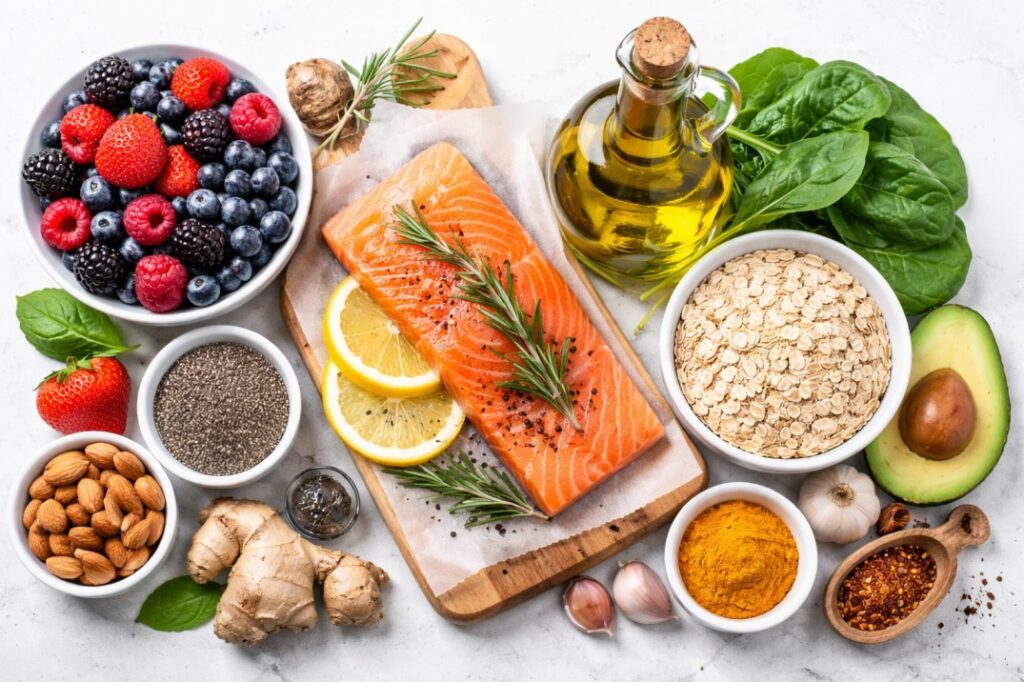
Berries are one of the easiest anti-inflammatory foods to add to your daily routine. Blueberries, strawberries, raspberries, and blackberries are widely available in American grocery stores year-round.
They are rich in antioxidants and natural compounds that help protect cells from stress. Berries work well as a quick snack, breakfast topping, or dessert alternative. Add them to oatmeal, yogurt, smoothies, or even salads for a refreshing boost.
Frozen berries are also a great option and often more affordable, making them perfect for everyday use.
Salmon: A Heart-Friendly Protein Choice
Salmon is a popular protein in many American households, and for good reason. It contains omega-3 fatty acids, which are known for supporting the body’s natural inflammatory response.
Wild-caught or farm-raised salmon can both be found at U.S. supermarkets. Grilling, baking, or pan-searing salmon with simple seasoning keeps meals flavorful and nourishing. Pair it with vegetables or whole grains for a balanced plate.
For budget-friendly options, canned salmon can still provide similar benefits and works well in salads or sandwiches.
Oats: A Comfort Food with Wellness Benefits
Oats are a staple breakfast choice across the United States. They are high in fiber, which supports digestion and helps maintain steady energy levels throughout the day.
Whole oats, steel-cut oats, or rolled oats are better options than instant versions with added sugars. Oats can be topped with berries, nuts, or a drizzle of honey for a satisfying and wholesome meal.
Including oats regularly can help support gut health, which plays a role in managing inflammation naturally.
Olive Oil: A Smart Swap in the Kitchen
Olive oil is a simple ingredient that can make a big difference. Extra virgin olive oil contains natural compounds that support heart health and help reduce inflammation when used consistently.
Swap butter or heavily processed oils with olive oil for cooking, salad dressings, or drizzling over vegetables. It fits easily into American recipes without changing flavors too much.
Using olive oil regularly is a small habit that supports long-term wellness.
Spices Used in American Kitchens
Many common spices found in American pantries offer anti-inflammatory benefits. These include:
- Turmeric – Often used in soups, rice dishes, and roasted vegetables
- Ginger – Great for teas, marinades, and stir-fries
- Cinnamon – Perfect for oatmeal, smoothies, and baked goods
- Garlic – A staple in almost every savory dish
These spices not only add flavor but also provide natural plant compounds that support the body. Even small amounts used consistently can contribute to overall balance.
Leafy Greens: Easy to Add, Easy to Love
Spinach, kale, romaine, and arugula are widely available in U.S. grocery stores. These greens are packed with vitamins and antioxidants that help support the body’s defenses.
Leafy greens can be added to salads, sandwiches, smoothies, soups, or sautéed as a side dish. Pre-washed greens make it even easier for busy Americans to include them daily.
Nuts and Seeds: Simple Everyday Snacks
Almonds, walnuts, chia seeds, and flaxseeds are easy to find and simple to include in meals. They provide healthy fats and nutrients that support balanced inflammation levels.
Snack on a small handful, sprinkle them over salads or yogurt, or mix them into oatmeal. Portion control is important, but regular intake can support overall wellness.
How Americans Can Build an Anti-Inflammatory Plate
You don’t need to change everything at once. Start by adding one or two anti-inflammatory foods to meals you already enjoy. Choose whole foods, cook at home when possible, and limit highly processed items.
Small, consistent changes often make the biggest difference over time.
Final Thoughts
Eating anti-inflammatory foods doesn’t mean giving up comfort or convenience. Many foods that support wellness are already part of American diets and available at nearly every grocery store.
By choosing berries, salmon, oats, olive oil, spices, and leafy greens more often, Americans can support their health in a natural and sustainable way — one meal at a time.