
Disclaimer: This article is for informational purposes only and does not replace professional medical advice. Always consult a healthcare provider or registered dietitian before making dietary changes.
Almond flour has become a popular pantry staple in many American homes. From gluten-free baking in California to low-carb meal prep in Texas, more people are swapping traditional wheat flour for almond flour. But as its popularity grows, so does an important question: Is almond flour actually healthy?
The short answer is yes—for many people, almond flour can be a nutritious alternative when used thoughtfully. However, like any food, its health value depends on how it fits into your overall diet and lifestyle.
Table of Contents
What Is Almond Flour?
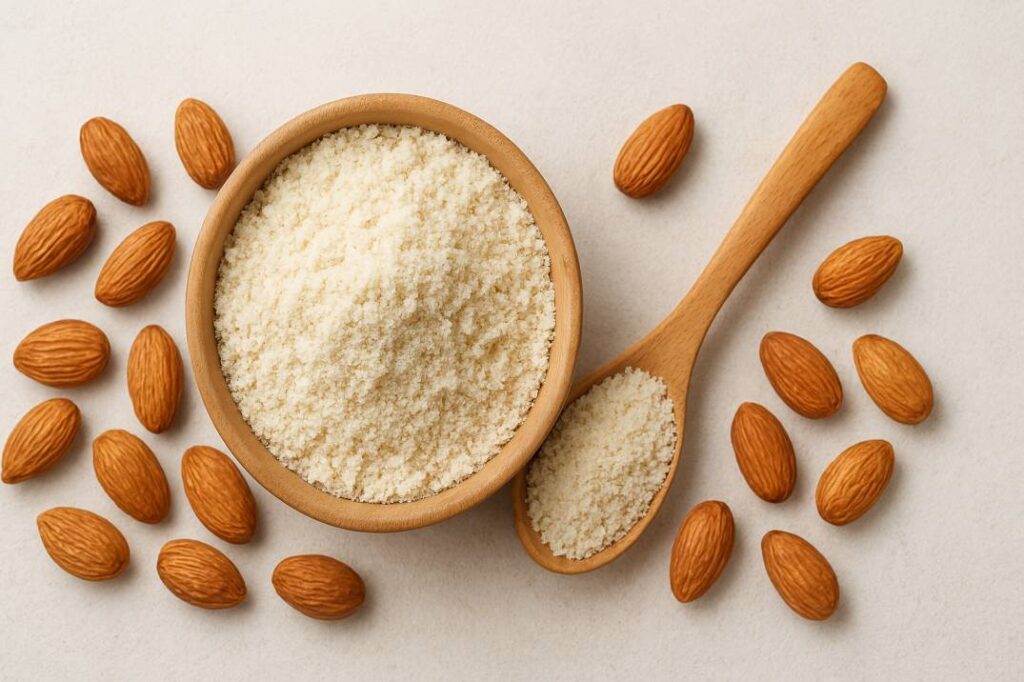
Almond flour is made from finely ground blanched almonds, meaning the skins are removed before grinding. This process creates a soft, light flour that works well in baking and cooking.
It’s different from almond meal, which is usually coarser and made with whole almonds, including the skins. Almond flour’s texture and mild flavor make it a favorite in recipes for pancakes, muffins, cookies, and even breading for meats or vegetables.
Nutritional Profile of Almond Flour
One of the main reasons almond flour is considered healthy is its nutrient density. Unlike refined wheat flour, almond flour provides:
- Healthy fats
- Plant-based protein
- Dietary fiber
- Vitamin E
- Magnesium and calcium
These nutrients support overall wellness and make almond flour more than just a baking substitute.
Health Benefits of Almond Flour
1. Naturally Gluten-Free
Almond flour is naturally free from gluten, making it a safe option for people with celiac disease or gluten sensitivity. For many Americans managing gluten intolerance, almond flour allows them to enjoy baked goods without digestive discomfort.
2. Supports Heart Health
Almond flour contains monounsaturated fats, which are associated with heart health when consumed in moderation. These fats help support healthy cholesterol levels and reduce reliance on refined carbohydrates.
3. Helps with Blood Sugar Control
Because almond flour is low in carbohydrates and high in fiber and fat, it has a lower impact on blood sugar compared to white flour. This can be helpful for people managing blood sugar levels or aiming for steady energy throughout the day.
4. Rich in Antioxidants
Almonds are a natural source of vitamin E, an antioxidant that helps protect cells from oxidative stress. Regular intake of vitamin E supports skin health and overall cellular function.
5. Promotes Fullness
The combination of protein, fat, and fiber helps promote satiety. Many people feel fuller longer after meals made with almond flour, which may help reduce unnecessary snacking.
Is Almond Flour Healthier Than Wheat Flour?
For some people, almond flour can be a healthier option—especially when compared to refined white flour. It contains fewer carbs, more nutrients, and no gluten.
However, almond flour is not automatically better for everyone. Whole-grain wheat flour still offers benefits like B vitamins and additional fiber. The healthiest choice depends on individual needs, dietary goals, and tolerance.
Almond Flour and Weight Management
Almond flour is calorie-dense due to its fat content, which means portion size matters. While it can support fullness and reduce cravings, using large amounts frequently may increase overall calorie intake.
For Americans focused on weight management, almond flour works best when used:
- In moderation
- As part of balanced meals
- Combined with whole foods like vegetables and lean proteins
Who Should Be Cautious with Almond Flour?
Almond flour isn’t suitable for everyone. People with:
- Tree nut allergies
- Certain digestive sensitivities
- Calorie-restricted diets
should use caution or seek professional guidance before adding it regularly.
How Americans Use Almond Flour in Everyday Cooking
Across the U.S., almond flour is used in a wide range of recipes:
- Gluten-free baking
- Low-carb or keto recipes
- Coating for chicken or fish
- Thickening soups or sauces
From weekend baking in Oregon to meal prep in Florida, almond flour offers flexibility for many cooking styles.
Tips for Choosing Quality Almond Flour
When shopping, look for:
- Blanched almond flour for smoother texture
- Products without added sugars or preservatives
- Fresh packaging to avoid rancid oils
Storing almond flour in the refrigerator or freezer can help maintain freshness.
Final Thoughts
So, is almond flour healthy? For many Americans, yes. It’s a nutrient-dense, gluten-free alternative that supports heart health, blood sugar balance, and mindful eating. While it shouldn’t replace all grains or be consumed in excess, almond flour can be a smart addition to a balanced diet.
As with any food, the key is moderation, variety, and listening to your body.
Trusted Source
Harvard T.H. Chan School of Public Health – Nuts and Health